
Emergency Water Damage Restoration in Walnut Creek, California
Burst pipe, water heater, failed appliance - a crew is typically at your door within 45 to 60 minutes, and we bill your insurance directly.
Typical Walnut Creek job $1,576 – $7,206 - on a covered loss you usually pay only your deductible.
☎ Call (562) 361-7064 24/7 emergency - insurance billed directConnects you to an independent partner contractor. We are paid for calls. Calls may be recorded.
How it works
Call the number
One call — no form to fill in and no email address to give.
Describe the job
Tell them what you need done in Walnut Creek and roughly when.
Get your price
You speak with a contractor covering your area and get a figure for your own project.
Decide freely
No obligation. The call is free for you — the contractor pays for it.
Walnut Creek water damage restoration pricing in 2026 is driven by failures that start inside the home: aging supply lines, water heaters and in‑home appliances. Many local houses were built mid‑20th century or earlier, with mixed‑age plumbing from piecemeal repairs. Slab‑on‑grade construction common in the region makes under‑slab leaks expensive because locating and accessing the source is labor intensive.
Insurance claims here typically cover sudden, accidental in‑home losses (not surface flooding). Insurers often send an adjuster to document cause and scope; homeowners should document damage, keep receipts and expect a scope that separates extraction, drying, and any necessary demolition and repairs.
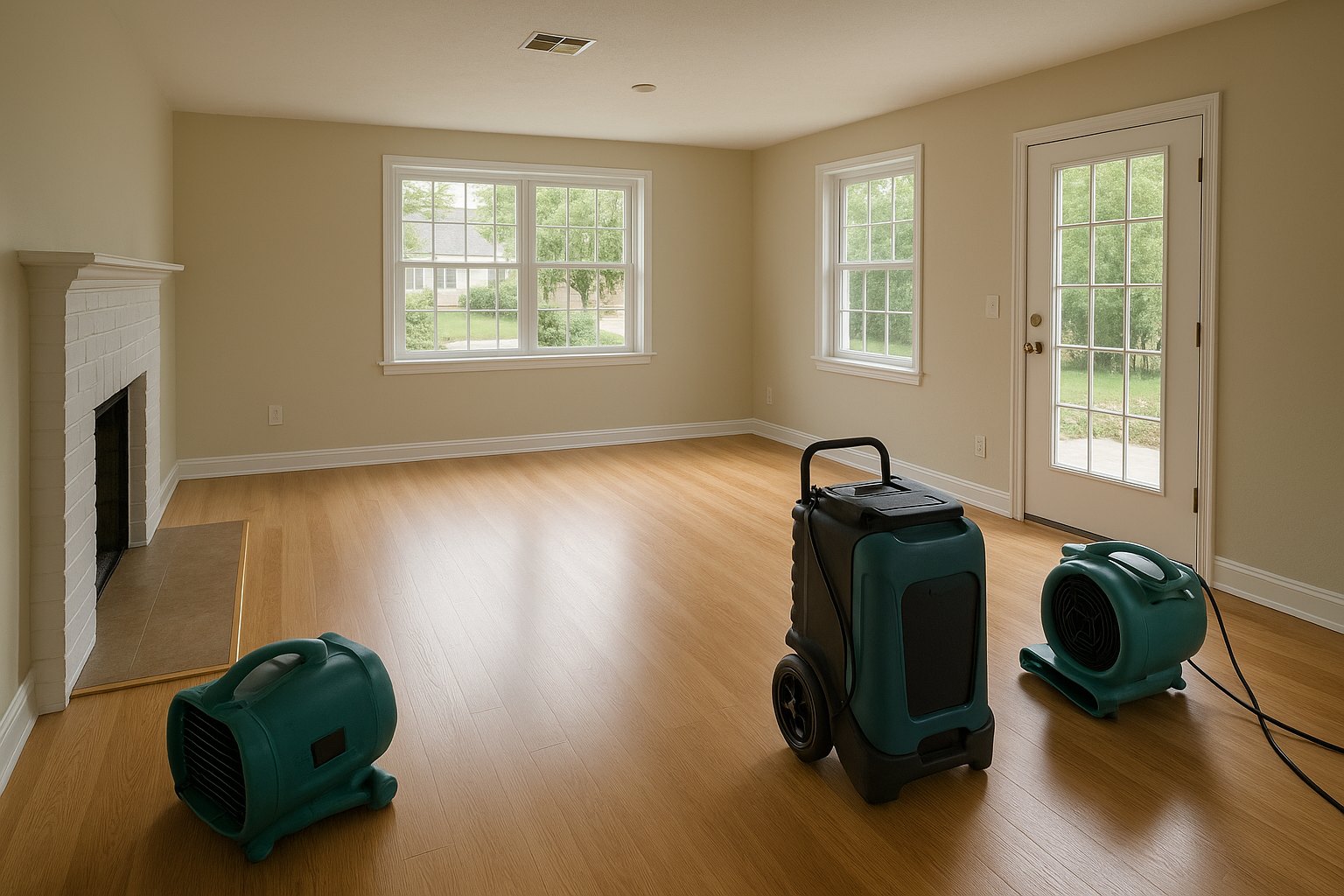
Water damage restoration cost in Walnut Creek: low, typical, high
| Low | Typical | High | |
|---|---|---|---|
| Total project | $1,576 | $4,391 | $7,206 |
| — Labor (≈60%) | $946 | $2,635 | $4,324 |
| — Materials (≈40%) | $631 | $1,757 | $2,883 |
Figures assume an average residential loss with Category 2 water affecting about three rooms. Steep, cut-up or hard-to-access roofs land above these ranges.
Why Walnut Creek prices run above the national average
Walnut Creek carries a local cost index of about 1.13 — water damage restoration labor, permits and equipment here price roughly 13% above the US average, driven mostly by labor rates. California water losses overwhelmingly start inside the building. Supply lines, water heaters and appliances fail in an aging housing stock, and slab-on-grade construction makes under-slab leaks both common and expensive to reach — the leak often runs for days before anyone notices. Seismic movement loosens joints and slab plumbing over time. Strict water conservation rules mean many homes have had fixtures replaced piecemeal, leaving mixed-age plumbing where old and new meet. Coastal humidity along the Southern California basin slows structural drying compared with inland valleys, which lengthens the job.
Timing is the one lever you don't have. A water loss is billed as emergency work from the first hour, and waiting for a cheaper week is what turns a drying job into a mold remediation. What you can still control: get the scope and the drying plan in writing, and make sure your insurer is looped in before demolition starts, not after.
Top-rated water damage restoration companies in Walnut Creek, CA
Highly-rated local water damage restoration companies based on public Google Business Profile data (as of October 2026), ranked by rating and review volume:
Ratings and review counts come from publicly available Google Business Profile listings and change over time — always verify current licensing and insurance before hiring. This list is informational, ranked algorithmically, and is not a paid placement or an endorsement. Business owners: to report an error or request removal, contact us and we'll act promptly. Rather not call around? Request your free quotes and matched local pros will contact you.
What causes water damage in Walnut Creek
Common causes of inside‑the‑home water losses in Walnut Creek
Most losses begin inside the building: burst or pinholed copper and PEX supply lines, failed hose connections on washers and dishwashers, ruptured water heaters (especially older tanks), and leaks from kitchen or bathroom fixtures where new components meet old plumbing. Slab‑on‑grade homes in the area can develop under‑slab leaks that run for days before surfacing — seismic settling and age‑hardened joints accelerate this. Sewage backups from blocked sanitary lines inside the home also occur and are treated as contaminated losses requiring different handling.
What to do in the first 24 hours
Start mechanical drying and extraction right away to limit secondary damage. Standing water wicks into drywall, flooring and framing; untreated moisture can delaminate flooring, stain finishes and allow mold to colonize within 24–72 hours. Prompt extraction lowers scope and cost: emergency extraction and drying work in Walnut Creek is priced per hour or per cubic foot of affected material, with equipment, containment and monitoring used until moisture targets are met. Photograph damage, move unaffected valuables out, and keep wet materials for adjuster inspection if safe to do so.
Insurance, exclusions and permits in California
California homeowners policies typically cover sudden, accidental water losses that originate inside the dwelling — for example a ruptured supply line or sudden appliance failure — but exclude damage from surface flooding, groundwater or long‑term seepage. Sewage backups may be excluded unless you have specific endorsements. Claims in Walnut Creek usually involve an initial mitigation claim for extraction/drying followed by a repair/rehab claim once the cause is fixed. Permits are commonly required for plumbing repairs that alter lines or require slab cuts; check with Contra Costa County or the city for permit thresholds and licensed‑contractor requirements.
How to hire a water damage restoration contractor in Walnut Creek (and what to avoid)
- Get 3 written bids. Line-item quotes make comparison honest — tear-off, underlayment, flashing, disposal, permit.
- Verify license & insurance. Ask for the California contractor registration/license number and a current certificate of insurance — then check them with the issuing authority.
- Check the paper trail. Manufacturer certifications (GAF, Owens Corning, CertainTeed) and a local physical address beat a magnetic truck sign.
- Never pay in full upfront. A deposit of 10–30% is normal; final payment on completed, inspected work.
- Get the warranty in writing. Separate manufacturer (materials) and workmanship coverage — and who honors it if the company changes hands.
🚩 Red flags — when an insurer is paying
- Asks you to sign an assignment of benefits before your insurer has inspected — you hand over control of the claim, and of what gets billed in your name.
- Starts tearing out drywall or flooring before photographing and measuring the damage. Insurers do not reimburse what nobody documented.
- No written drying plan and no daily moisture readings. Without a log there is nothing to prove the structure actually dried, and mold surfaces weeks later.
- Bills the insurer directly without ever showing you the scope of work.
Emergency water extraction in Walnut Creek
Not every loss turns into a full restoration. Typical pricing for the work itself in Walnut Creek:
- Minor repairs (a few shingles, pipe boot): $169 – $507
- Leak diagnosis and repair: $563 – $1,689
Rule of thumb: when repairs approach 25–30% of replacement cost on aging equipment, replacement is usually the better long-term spend. See the full repair cost guide.
How we calculate Walnut Creek costs
We start from documented national baselines, size the job to a typical home for this metro, then apply Walnut Creek's local cost index (≈1.13). Full details on our methodology page. These are planning ranges, not quotes — a real bid for your specific water damage beats any model. Want that real number? Get free local quotes.
Frequently asked questions
What does a typical water damage job in Walnut Creek cost?
Local residential losses (Category 2 water, three rooms affected) range from about $1,576 to $7,206, with a typical job near $4,391. Costs vary with access difficulty (under‑slab work is more expensive), extent of contamination, and whether structural demolition is required.
Will my homeowners insurance in California cover a burst supply line?
Most CA homeowners policies cover sudden, accidental water losses that start inside the home, such as a burst supply line. Policies commonly exclude long‑term leaks, groundwater and surface flood. Review your policy and any endorsements; insurers often separate mitigation (extraction/drying) from repair coverage in the claim process.
How long does drying usually take?
Drying time depends on materials and extent of intrusion: small, contained jobs can dry in days; larger jobs with wet framing, plaster or under‑slab exposure take longer. Technicians monitor moisture until targets are reached; drying duration increases when demolition or repairs are needed before access can be completed.
What happens if drying is delayed?
Delays increase the risk of secondary damage: swelling, delamination, staining and structural weakening. Mold can begin to grow within 24–72 hours in favorable conditions, which raises remediation scope and cost and can complicate insurance coverage if the loss is deemed neglected.
How can I tell clean water from contaminated water?
Clean (Category 1) water comes from potable sources like supply lines or appliances; it looks clear and has little odor. Category 2 (gray) may contain detergents or appliance discharge. Category 3 (black) includes sewage or standing water with strong odors and solids. When in doubt, treat it as contaminated and use professional mitigation.
How Walnut Creek compares to nearby metros
| Metro | Typical replacement | vs Walnut Creek |
|---|---|---|
| Los Angeles, CA | $4,505 | +3% |
| San Diego, CA | $4,349 | -1% |
| San Jose, CA | $4,403 | 0% |
| San Francisco, CA | $4,610 | +5% |
Ready for a real number for your Walnut Creek water damage?
One call and a contractor covering Walnut Creek prices your own project — no form, no email, no obligation.
☎ (562) 361-7064