
Emergency Water Damage Restoration in Menlo Park, California
Burst pipe, water heater, failed appliance - a crew is typically at your door within 45 to 60 minutes, and we bill your insurance directly.
Typical Menlo Park job $1,576 – $7,206 - on a covered loss you usually pay only your deductible.
☎ Call (562) 361-7064 24/7 emergency - insurance billed directConnects you to an independent partner contractor. We are paid for calls. Calls may be recorded.
How it works
Call the number
One call — no form to fill in and no email address to give.
Describe the job
Tell them what you need done in Menlo Park and roughly when.
Get your price
You speak with a contractor covering your area and get a figure for your own project.
Decide freely
No obligation. The call is free for you — the contractor pays for it.
Menlo Park pricing for water damage restoration in 2026 is driven by failures that originate inside homes: aging supply lines, water heaters and appliances are the dominant causes. Much of the local housing stock dates from mid-20th century through recent infill; many properties sit on slab-on-grade foundations and contain mixed-age plumbing where seismic movement has stressed joints over decades.
Insurance in California generally treats sudden, accidental in-home leaks as covered perils while excluding long-term neglect and surface flooding. Claim handling in Menlo Park commonly involves a rapid documented scope, moisture mapping, and coordination with adjusters to separate repair costs from mitigation and reconstruction expenses.
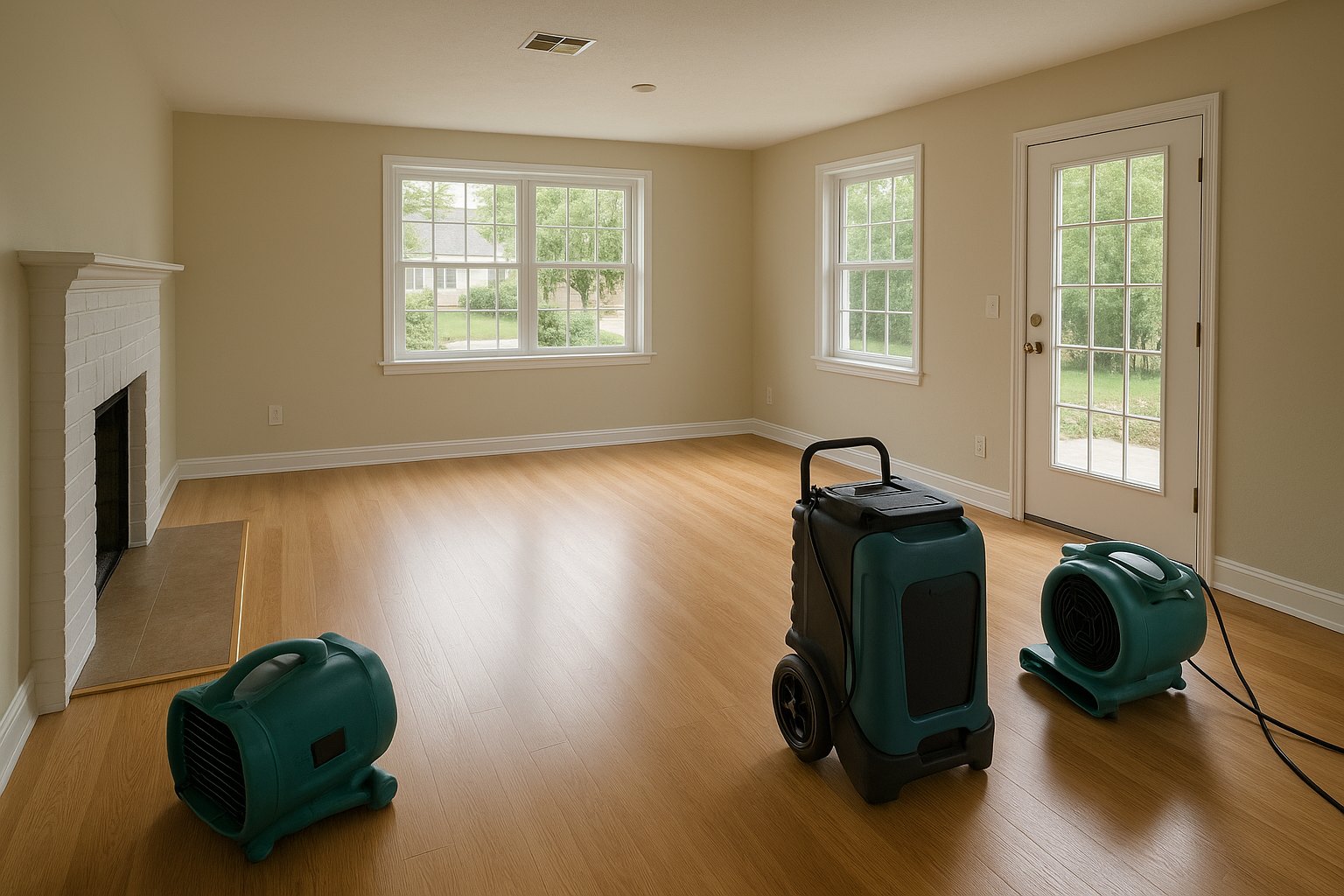
Water damage restoration cost in Menlo Park: low, typical, high
| Low | Typical | High | |
|---|---|---|---|
| Total project | $1,576 | $4,391 | $7,206 |
| — Labor (≈60%) | $946 | $2,635 | $4,324 |
| — Materials (≈40%) | $631 | $1,757 | $2,883 |
Figures assume an average residential loss with Category 2 water affecting about three rooms. Steep, cut-up or hard-to-access roofs land above these ranges.
Why Menlo Park prices run above the national average
Menlo Park carries a local cost index of about 1.13 — water damage restoration labor, permits and equipment here price roughly 13% above the US average, driven mostly by labor rates. California water losses overwhelmingly start inside the building. Supply lines, water heaters and appliances fail in an aging housing stock, and slab-on-grade construction makes under-slab leaks both common and expensive to reach — the leak often runs for days before anyone notices. Seismic movement loosens joints and slab plumbing over time. Strict water conservation rules mean many homes have had fixtures replaced piecemeal, leaving mixed-age plumbing where old and new meet. Coastal humidity along the Southern California basin slows structural drying compared with inland valleys, which lengthens the job.
Timing is the one lever you don't have. A water loss is billed as emergency work from the first hour, and waiting for a cheaper week is what turns a drying job into a mold remediation. What you can still control: get the scope and the drying plan in writing, and make sure your insurer is looped in before demolition starts, not after.
Top-rated water damage restoration companies in Menlo Park, CA
Highly-rated local water damage restoration companies based on public Google Business Profile data (as of October 2026), ranked by rating and review volume:
Ratings and review counts come from publicly available Google Business Profile listings and change over time — always verify current licensing and insurance before hiring. This list is informational, ranked algorithmically, and is not a paid placement or an endorsement. Business owners: to report an error or request removal, contact us and we'll act promptly. Rather not call around? Request your free quotes and matched local pros will contact you.
What causes water damage in Menlo Park
What causes water damage in Menlo Park homes
In Menlo Park, water losses overwhelmingly start inside the building. The most common sudden sources are burst or ruptured supply lines, failed water heaters, and appliance failures (dishwashers, refrigerators, washing machines). Under-slab plumbing and slab-on-grade leaks are frequent here: when pipes beneath a concrete slab leak, the loss can go unnoticed for days and migrate through foundations. Interior wall plumbing joints loosen over time—seismic settling contributes. Sewer backups from lateral blockages or pipe failures also occur and are treated as in-home accidental losses when they originate on the property.
First 24 hours: what to do and why drying must start fast
Start mitigation immediately: shut off the water source, remove excess standing water, and begin drying and dehumidification. Rapid drying limits structural swelling, delamination of flooring, drywall failure, and microbial growth. Mold can begin forming within 24–48 hours on porous materials; delayed action raises remediation scope and cost substantially because affected materials often require controlled demolition and replacement rather than restoration.
Insurance and permits in California
Most homeowner policies in California cover sudden, accidental in-home water losses (e.g., burst pipes, sudden appliance failure) but exclude flood, surface water, and long-term seepage or neglect. Sewer backups may be covered if a rider is in place. For significant repairs—especially slab repairs or any work that affects structural elements—local permits are often required by Menlo Park/ San Mateo County building departments. File a timely claim, document damage with photos, keep receipts, and coordinate mitigation steps with your adjuster to separate mitigation from reconstruction costs.
How to hire a water damage restoration contractor in Menlo Park (and what to avoid)
- Get 3 written bids. Line-item quotes make comparison honest — tear-off, underlayment, flashing, disposal, permit.
- Verify license & insurance. Ask for the California contractor registration/license number and a current certificate of insurance — then check them with the issuing authority.
- Check the paper trail. Manufacturer certifications (GAF, Owens Corning, CertainTeed) and a local physical address beat a magnetic truck sign.
- Never pay in full upfront. A deposit of 10–30% is normal; final payment on completed, inspected work.
- Get the warranty in writing. Separate manufacturer (materials) and workmanship coverage — and who honors it if the company changes hands.
🚩 Red flags — when an insurer is paying
- Asks you to sign an assignment of benefits before your insurer has inspected — you hand over control of the claim, and of what gets billed in your name.
- Starts tearing out drywall or flooring before photographing and measuring the damage. Insurers do not reimburse what nobody documented.
- No written drying plan and no daily moisture readings. Without a log there is nothing to prove the structure actually dried, and mold surfaces weeks later.
- Bills the insurer directly without ever showing you the scope of work.
Emergency water extraction in Menlo Park
Not every loss turns into a full restoration. Typical pricing for the work itself in Menlo Park:
- Minor repairs (a few shingles, pipe boot): $169 – $507
- Leak diagnosis and repair: $563 – $1,689
Rule of thumb: when repairs approach 25–30% of replacement cost on aging equipment, replacement is usually the better long-term spend. See the full repair cost guide.
How we calculate Menlo Park costs
We start from documented national baselines, size the job to a typical home for this metro, then apply Menlo Park's local cost index (≈1.13). Full details on our methodology page. These are planning ranges, not quotes — a real bid for your specific water damage beats any model. Want that real number? Get free local quotes.
Frequently asked questions
How much does a typical Menlo Park residential water damage job cost?
Local residential water damage restoration for a Category 2 loss affecting about three rooms typically ranges from $1,576 to $7,206, with a common cost around $4,391. Local labor and permit costs tend to be higher than the national average—Menlo Park’s cost index of 1.13 can push the upper end of a scope up modestly.
Will my California homeowners insurance cover a burst pipe inside the house?
Most California homeowners policies cover sudden, accidental in-home events such as burst supply lines or a failed water heater. Policies generally exclude flood, surface water, and damage from long-term neglect. Check your declarations and talk to your insurer about coverage limits, deductibles, and whether sewer-backup or service-line endorsements are needed.
What does emergency water extraction and drying cost in Menlo Park?
Emergency extraction and drying services in the area typically fall between $5 and $14 per square foot for initial mitigation tasks. Final cost depends on affected area, equipment runtime, and whether structural drying or controlled demolition is required to reach hidden moisture.
How long does proper drying take for a typical home water loss?
Drying time depends on materials affected and the severity of the loss. Surface drying and dehumidification for isolated areas often take several days; when water migrates into framing, flooring, or under slabs, drying and verification with moisture meters can take one to multiple weeks. Extended drying needs increase remediation scope and cost.
How can I tell if the water is clean or contaminated?
Clean (Category 1) water comes from a potable supply line or appliance with no contaminants; Category 2 (gray) includes appliance discharge or dishwasher overflows; Category 3 (black) includes sewer backups and standing water with contaminants. Visual cues, source location, odors, and contact with sewage will indicate contamination—when in doubt, treat as contaminated and involve professionals.
How Menlo Park compares to nearby metros
| Metro | Typical replacement | vs Menlo Park |
|---|---|---|
| Los Angeles, CA | $4,505 | +3% |
| San Diego, CA | $4,349 | -1% |
| San Jose, CA | $4,403 | 0% |
| San Francisco, CA | $4,610 | +5% |
Ready for a real number for your Menlo Park water damage?
One call and a contractor covering Menlo Park prices your own project — no form, no email, no obligation.
☎ (562) 361-7064