
Emergency Water Damage Restoration in Campbell, California
Burst pipe, water heater, failed appliance - a crew is typically at your door within 45 to 60 minutes, and we bill your insurance directly.
Typical Campbell job $1,576 – $7,206 - on a covered loss you usually pay only your deductible.
☎ Call (562) 361-7064 24/7 emergency - insurance billed directConnects you to an independent partner contractor. We are paid for calls. Calls may be recorded.
How it works
Call the number
One call — no form to fill in and no email address to give.
Describe the job
Tell them what you need done in Campbell and roughly when.
Get your price
You speak with a contractor covering your area and get a figure for your own project.
Decide freely
No obligation. The call is free for you — the contractor pays for it.
Campbell’s water‑damage prices in 2026 reflect local housing and plumbing realities: much of the stock was built between the 1950s and 1980s, with a large share of slab‑on‑grade foundations and mixed‑age retrofit plumbing. In this market most losses begin inside the house—burst supply lines, failing water heaters and appliance leaks are common—so restoration scope concentrates on interior extraction, drying and demolition where necessary.
Insurance handling is typically a standard homeowners claim in Santa Clara County: carriers evaluate sudden, accidental interior losses as covered per policy language, but they exclude flooding and wear‑and‑tear. Local contractors price jobs to account for tricky under‑slab access, potential permit work, and California conservation retrofits that create mixed‑age plumbing joints.
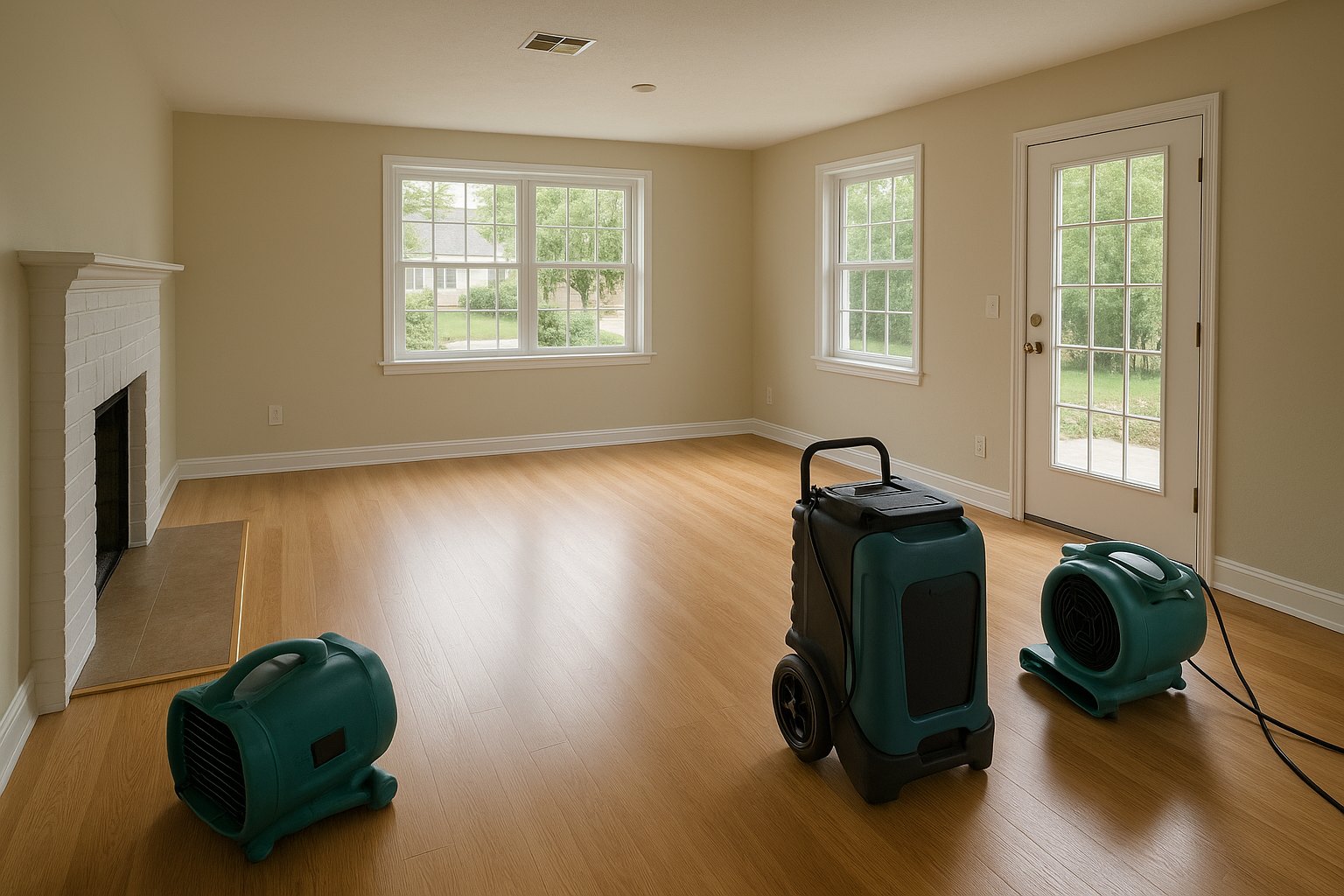
Water damage restoration cost in Campbell: low, typical, high
| Low | Typical | High | |
|---|---|---|---|
| Total project | $1,576 | $4,391 | $7,206 |
| — Labor (≈60%) | $946 | $2,635 | $4,324 |
| — Materials (≈40%) | $631 | $1,757 | $2,883 |
Figures assume an average residential loss with Category 2 water affecting about three rooms. Steep, cut-up or hard-to-access roofs land above these ranges.
Why Campbell prices run above the national average
Campbell carries a local cost index of about 1.13 — water damage restoration labor, permits and equipment here price roughly 13% above the US average, driven mostly by labor rates. California water losses overwhelmingly start inside the building. Supply lines, water heaters and appliances fail in an aging housing stock, and slab-on-grade construction makes under-slab leaks both common and expensive to reach — the leak often runs for days before anyone notices. Seismic movement loosens joints and slab plumbing over time. Strict water conservation rules mean many homes have had fixtures replaced piecemeal, leaving mixed-age plumbing where old and new meet. Coastal humidity along the Southern California basin slows structural drying compared with inland valleys, which lengthens the job.
Timing is the one lever you don't have. A water loss is billed as emergency work from the first hour, and waiting for a cheaper week is what turns a drying job into a mold remediation. What you can still control: get the scope and the drying plan in writing, and make sure your insurer is looped in before demolition starts, not after.
Top-rated water damage restoration companies in Campbell, CA
Highly-rated local water damage restoration companies based on public Google Business Profile data (as of October 2026), ranked by rating and review volume:
Ratings and review counts come from publicly available Google Business Profile listings and change over time — always verify current licensing and insurance before hiring. This list is informational, ranked algorithmically, and is not a paid placement or an endorsement. Business owners: to report an error or request removal, contact us and we'll act promptly. Rather not call around? Request your free quotes and matched local pros will contact you.
What causes water damage in Campbell
What actually causes water damage in Campbell
In Campbell most insured water losses start inside the residence. Common causes are ruptured supply lines (rigid copper or older flex lines), failed water heaters, washing machine or dishwasher leaks, and plumbing fittings that separate at mixed‑age transitions. Slab‑on‑grade homes bring frequent under‑slab leaks: a slow slab leak can run for days before detection and drives up repair and restoration costs because accessing slab piping often requires concrete cutting. Sewer backups in older lateral connections or clogged interior drains also occur; those incidents are typically handled as separate, higher‑contamination jobs.
First 24 hours: what to do and why drying must start fast
Begin by stopping the source (shut off the main or appliance valve) and removing standing water where it’s safe. Fast drying limits secondary damage: swelling and delamination of wood floors, drywall deterioration, adhesive failure, and mold colonization. Every 24–48 hours of delay raises the chance of visible mold and of permanently damaged finishes that require demolition. Immediate measurable drying—controlled dehumidification, targeted air movement and moisture mapping—reduces total repair scope and cost.
Insurance, permits and how claims usually proceed in CA
California homeowners policies commonly cover sudden and accidental interior water losses but exclude flood, long‑term neglect and routine maintenance failures. For sewage backflows or contaminated water there can be different coverage limits. Locally, claims are opened with the carrier, an adjuster documents damage, and licensed restoration firms provide scope and drying documentation. Repair work that alters structural components or penetrates foundations can require city permits; contractors familiar with Santa Clara County practices will flag permit needs on the estimate.
How to hire a water damage restoration contractor in Campbell (and what to avoid)
- Get 3 written bids. Line-item quotes make comparison honest — tear-off, underlayment, flashing, disposal, permit.
- Verify license & insurance. Ask for the California contractor registration/license number and a current certificate of insurance — then check them with the issuing authority.
- Check the paper trail. Manufacturer certifications (GAF, Owens Corning, CertainTeed) and a local physical address beat a magnetic truck sign.
- Never pay in full upfront. A deposit of 10–30% is normal; final payment on completed, inspected work.
- Get the warranty in writing. Separate manufacturer (materials) and workmanship coverage — and who honors it if the company changes hands.
🚩 Red flags — when an insurer is paying
- Asks you to sign an assignment of benefits before your insurer has inspected — you hand over control of the claim, and of what gets billed in your name.
- Starts tearing out drywall or flooring before photographing and measuring the damage. Insurers do not reimburse what nobody documented.
- No written drying plan and no daily moisture readings. Without a log there is nothing to prove the structure actually dried, and mold surfaces weeks later.
- Bills the insurer directly without ever showing you the scope of work.
Emergency water extraction in Campbell
Not every loss turns into a full restoration. Typical pricing for the work itself in Campbell:
- Minor repairs (a few shingles, pipe boot): $169 – $507
- Leak diagnosis and repair: $563 – $1,689
Rule of thumb: when repairs approach 25–30% of replacement cost on aging equipment, replacement is usually the better long-term spend. See the full repair cost guide.
How we calculate Campbell costs
We start from documented national baselines, size the job to a typical home for this metro, then apply Campbell's local cost index (≈1.13). Full details on our methodology page. These are planning ranges, not quotes — a real bid for your specific water damage beats any model. Want that real number? Get free local quotes.
Frequently asked questions
What will a typical water damage restoration job cost in Campbell?
For an average residential interior loss with Category 2 water affecting about three rooms, local pricing in 2026 typically falls within the national-based range of $1,576–$7,206, with a common job near $4,391. Slab access, sewage contamination or extensive demolition raise that total.
Does homeowners insurance in California usually cover water damage?
Most California homeowners policies cover sudden, accidental interior water losses (burst pipes, appliance failures) but exclude flood, gradual leaks from neglect, and routine wear. Coverage details and deductibles vary—check your policy and document the loss promptly for the claim process.
How long does the drying process usually take?
Drying duration depends on materials affected and access: typical structural and content drying runs from several days to a few weeks. Under‑slab work, high humidity, or saturated insulation lengthen drying. Technicians use moisture mapping and dehumidification logs to confirm when drying goals are met.
What happens if drying is delayed?
Delays increase risk of mold growth, wood and drywall deterioration, adhesive and paint failure, and odor development—each adds scope and cost. What began as a limited extraction job can escalate to demolition and replacement of structural elements if drying isn’t controlled quickly.
How can I tell clean water from contaminated water?
Clean (Category 1) typically comes from supply lines or new appliance failures. Greywater (Category 2) includes dishwasher or washing machine overflows. Blackwater (Category 3) includes sewer backups or flood‑contaminated sources and requires full remediation. When in doubt treat it as contaminated and follow professional guidance.
How Campbell compares to nearby metros
| Metro | Typical replacement | vs Campbell |
|---|---|---|
| Los Angeles, CA | $4,505 | +3% |
| San Diego, CA | $4,349 | -1% |
| San Jose, CA | $4,403 | 0% |
| San Francisco, CA | $4,610 | +5% |
Ready for a real number for your Campbell water damage?
One call and a contractor covering Campbell prices your own project — no form, no email, no obligation.
☎ (562) 361-7064